Damaged Pavement Creates Safety and Liability Issues
Pothole Repairs in Hartsville, Sumter, SC and surrounding areas for broken asphalt surfaces that create tripping hazards and vehicle damage
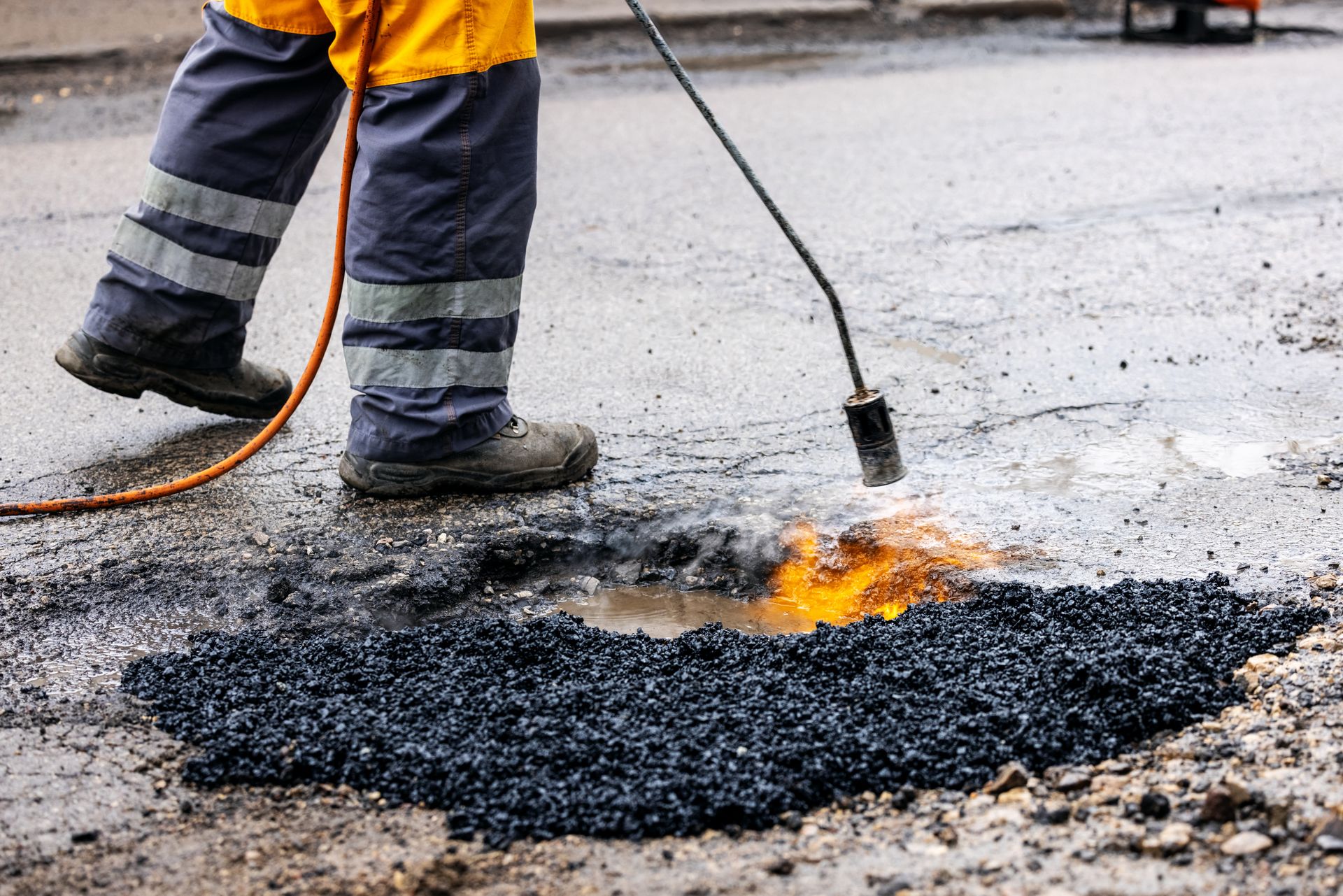
Blacktop Sealcoating repairs potholes in asphalt driveways and parking lots throughout Hartsville, South Carolina and neighboring communities, restoring damaged pavement to a smooth, safe surface. You notice potholes when vehicle traffic and water infiltration combine with temperature changes to break down the asphalt base, leaving craters that collect rainwater and worsen with each freeze-thaw cycle.
This service removes the compromised material and installs new patch material that bonds with the existing surface, eliminating the risk of twisted ankles, damaged suspension, and pooling water that accelerates further deterioration.
The repair process begins by cutting out the damaged asphalt to reach stable pavement below, removing debris and loose material from the cavity. Water infiltration weakens the base layer beneath the surface, so addressing the underlying cause prevents the same hole from reopening weeks later. Fresh asphalt is compacted into the prepared area and leveled with the surrounding pavement, creating a flush surface that handles vehicle weight without sinking or cracking at the seams.
If you manage a commercial property or own a home with visible pavement craters, contact Blacktop Sealcoating to schedule an assessment of the damage and discuss repair options suited to your traffic patterns.
Timely Repairs Prevent Small Breaks From Becoming Structural Failures
You avoid costly repaving projects by repairing potholes as soon as they appear, before water reaches the base layer and undermines the surrounding asphalt. A small surface depression becomes a deep cavity when rain seeps through cracks, softens the soil underneath, and creates voids that collapse under vehicle weight. Patching the damaged section while the base remains intact preserves the structural integrity of your driveway or parking lot and stops the failure from spreading outward.
After the repair, you see a level driving surface free of jarring bumps and standing water. Vehicles no longer swerve to avoid damaged sections, and pedestrians walk across the pavement without stepping around hazards. Blacktop Sealcoating uses materials that cure quickly, allowing you to resume normal traffic flow within hours rather than days. The patch withstands the same weather exposure and load-bearing demands as the original asphalt, maintaining uniform appearance and performance across the entire surface.
Repair work addresses the visible damage but does not prevent new potholes from forming in other areas affected by aging or poor drainage. Regular sealcoating and crack filling reduce the likelihood of future failures, but those services operate on a separate maintenance schedule. Pothole repair resolves immediate safety concerns and restores pavement function, not long-term surface protection.
Property owners in Hartsville, Columbia, Charlotte, and surrounding areas often ask how repairs hold up under local conditions, whether patches match the existing pavement, and when full replacement becomes necessary instead of continued patching.
What Repair Methods Work Best for Different Pothole Sizes
What determines whether a pothole can be patched or requires full pavement replacement?
Potholes are repairable when the surrounding asphalt remains structurally sound and the base layer has not eroded beyond the damaged area. If multiple potholes cluster together or the base shows widespread failure, replacement becomes the more cost-effective solution.
How long does a pothole repair last before the same area fails again?
A properly installed patch lasts several years when the base is stable and drainage prevents water from pooling in the repair zone. Repairs fail prematurely if underlying water issues remain unaddressed or if the surrounding pavement continues to deteriorate.
What happens if I delay repairing a pothole that is growing larger?
The hole deepens as traffic breaks away additional asphalt around the edges, and water infiltration softens the base layer beneath the surface. Delaying repair increases the volume of material needed and raises the risk of damage spreading to adjacent pavement sections.
Why do some patches settle or sink below the surrounding pavement after installation?
Settling occurs when the base layer is not properly compacted before asphalt is placed, or when water continues to erode soil beneath the patch. Proper compaction and adequate drainage prevent the new material from sinking under vehicle weight.
When should I schedule pothole repairs to minimize disruption to traffic flow?
Repairs in Hartsville proceed fastest during dry weather when the pavement is free of standing water and temperatures support proper curing. Scheduling work during lower-traffic periods reduces the need to redirect vehicles around the repair zone.
Blacktop Sealcoating evaluates the depth and extent of pavement damage before beginning repair work, ensuring the patch bonds securely and performs under the load conditions your surface experiences. Call (843) 307-6453 to arrange an on-site inspection and receive a detailed estimate for the work required.