Pavement That Holds Up Under Fleet Traffic
Commercial seal coating in Hartsville, Sumter, SC and surrounding areas for lots showing surface oxidation, cracking edges, or accelerating wear patterns
Blacktop Sealcoating applies commercial seal coating to parking lots, drive lanes, and service aprons used by businesses where pavement deterioration directly affects daily operations. Unprotected asphalt oxidizes from the surface down, losing the binder that holds aggregate in place and producing the gray, brittle texture that precedes cracking. Once that binder layer is gone, water enters through surface pores and works into the base, widening damage far faster than the surface appearance suggests.
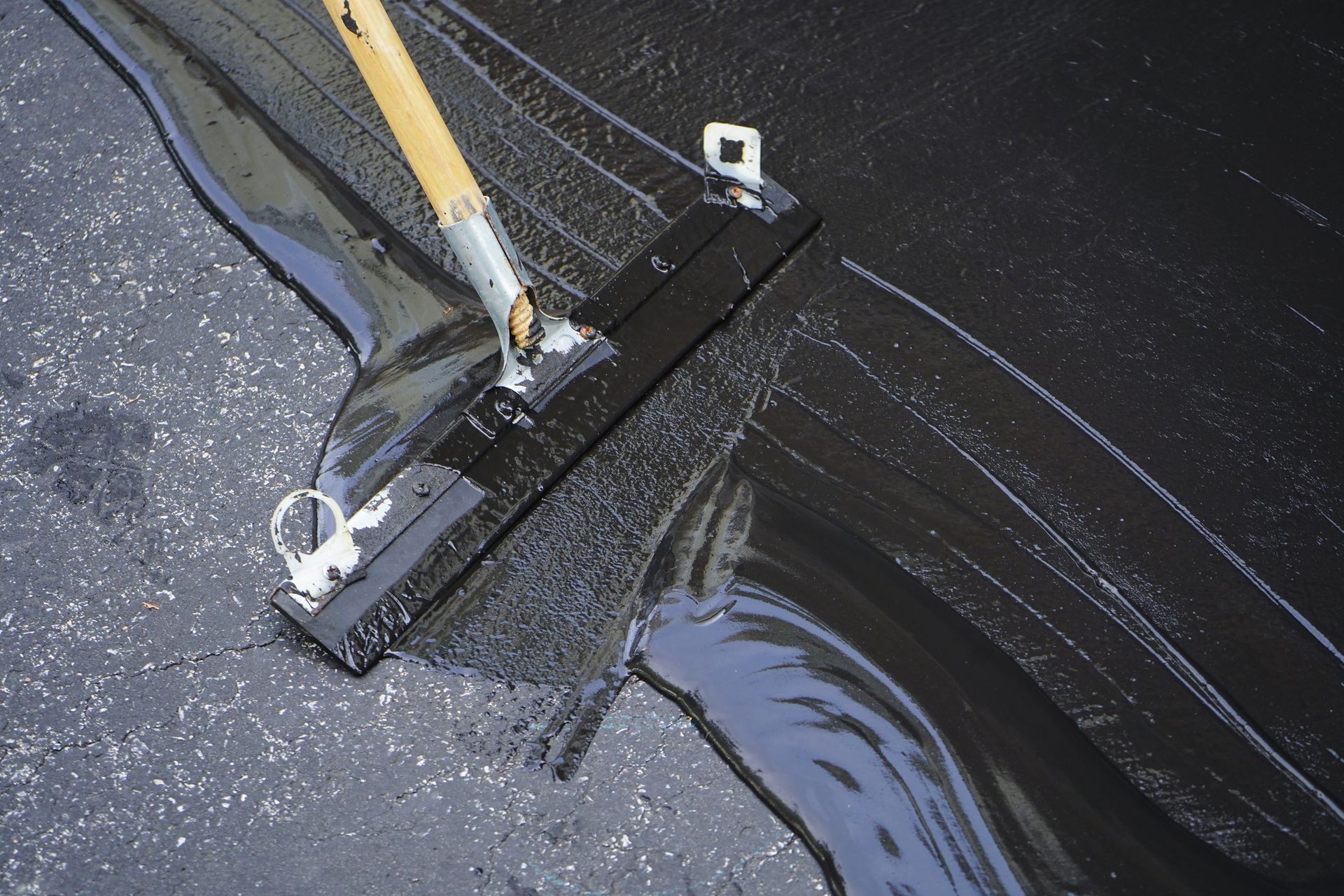
The process begins with a surface assessment to identify areas where oxidation, edge cracking, or standing water have compromised the pavement structure. Existing cracks are addressed before any coating is applied, because sealing over an active crack without prior treatment produces a visible failure within a single traffic season. The sealcoat material is then applied in uniform passes to create a protective layer that closes surface pores, restores flexibility to the top course, and produces the dark, even finish that indicates complete coverage.
Arrange a pavement assessment with Blacktop Sealcoating to identify which sections of your lot require crack treatment before coating begins.
What Changes After the Sealcoat Cures
After a properly applied sealcoat cures, the pavement surface shifts from a porous, oxidized state to a closed, uniform layer that repels surface water rather than absorbing it. That change is measurable: water that previously puddled and soaked in now beads and drains toward existing catch basins instead. The restored surface flexibility also means that the light surface cracking common in aged lots stops propagating under traffic load the way it would on untreated pavement.
What you will see after the project is complete includes a consistent dark finish across treated areas, clearly defined boundaries between coated and uncoated sections, and line striping that reads sharply against the new surface if striping is part of the scope. Uneven coverage, thin spots, or pooling along low areas are indicators that application was not performed at adequate film thickness—these are the quality checks worth making before the crew leaves the site.
Commercial lots vary significantly in condition depending on original paving quality, the volume and type of traffic they carry, and how long the surface has been exposed without treatment. Heavy delivery vehicle traffic concentrates wear at turn radii and entry aprons, which typically require more preparation work than open parking fields. The scope of any commercial project should account for these high-stress zones separately rather than treating the entire lot as uniform.
Commercial property managers often have specific questions about the work itself before authorizing a pavement maintenance project. The following addresses what actually happens on site.
Answers About How the Work Is Done
What preparation does the pavement surface require before sealcoat is applied?
The surface must be clean, dry, and free of oil contamination. Oil-saturated areas are treated with a primer coat designed to bond with petroleum-affected pavement, because standard sealcoat will not adhere correctly to untreated oil spots and will peel within weeks of application.
How does crack width affect what treatment is used before sealing?
Cracks under a quarter inch wide are typically routed and filled with a flexible crack filler that moves with the pavement. Wider cracks or areas showing alligator distress indicate base failure and require a different scope of work entirely—sealcoating over base failures produces a cosmetic result that degrades quickly under load.
Why does curing time matter for commercial lots that need to stay operational?
Sealcoat requires a minimum cure period before it can carry vehicle traffic without tracking or surface damage. Staging the work in sections allows portions of the lot to remain open while treated areas cure, which is standard practice for occupied commercial properties in Hartsville, Sumter, SC and surrounding areas.
What determines how many coats a commercial lot requires?
Pavement in poor oxidative condition with a heavily weathered surface texture typically requires two coats to achieve full pore closure. A single coat on heavily textured pavement may leave aggregate exposed at high points, which shows as light spots in the finished surface.
How do you verify that the sealcoat was applied at the correct film thickness?
Uniform film thickness is confirmed visually during application by monitoring spread rate against the total surface area. Experienced applicators track material usage per square foot; a job that consumes significantly less material than the surface area warrants is a direct indicator of insufficient coverage.
Blacktop Sealcoating works with property managers and facilities teams to schedule commercial seal coating around business hours, tenant activity, and lot access requirements. Contact Blacktop Sealcoating directly to review your pavement condition and identify the preparation scope your property requires.