Striping Built Into the Project From Day One
New construction line striping in Hartsville, Sumter, SC and surrounding areas for freshly paved parking lots and parking decks requiring compliant layout and durable markings
New parking lots and parking decks present a specific striping challenge that aged surfaces do not: the pavement is structurally sound but chemically active, and applying line striping before the asphalt has fully cured produces adhesion failures that require the work to be redone. Blacktop Sealcoating handles new construction line striping for commercial properties in Hartsville, Sumter, SC and surrounding areas, coordinating the timing of paint application with the pavement's cure state to avoid that failure mode from the start.
The striping process on new construction begins with a layout review against the approved site plan, confirming stall dimensions, drive aisle widths, accessible parking counts, and signage anchor locations before the first line is marked. Parking decks add a structural layer to this process—deck surfaces are often coated concrete rather than asphalt, and the paint system selected must be appropriate for the substrate. Waterborne traffic paints perform differently on concrete decks than on asphalt lots, and mismatched product selection shows up as premature peeling at transition zones where vehicles turn and brake repeatedly.
Schedule a layout consultation with Blacktop Sealcoating before your new lot or deck is ready for final inspection, so that striping can be coordinated into the close-out sequence without delaying certificate of occupancy.
Why Substrate Timing Determines Striping Durability
Fresh asphalt continues off-gassing petroleum compounds for a period after paving, and those compounds interfere with paint adhesion at the molecular level. The practical result is striping that looks correct immediately after application but lifts at the edges within the first season of traffic. On new parking decks, concrete must reach adequate compressive strength and surface dryness before coatings are applied—applying striping paint to green concrete produces a similar adhesion failure, particularly in high-turn areas like entrance lanes and accessible stall approaches.
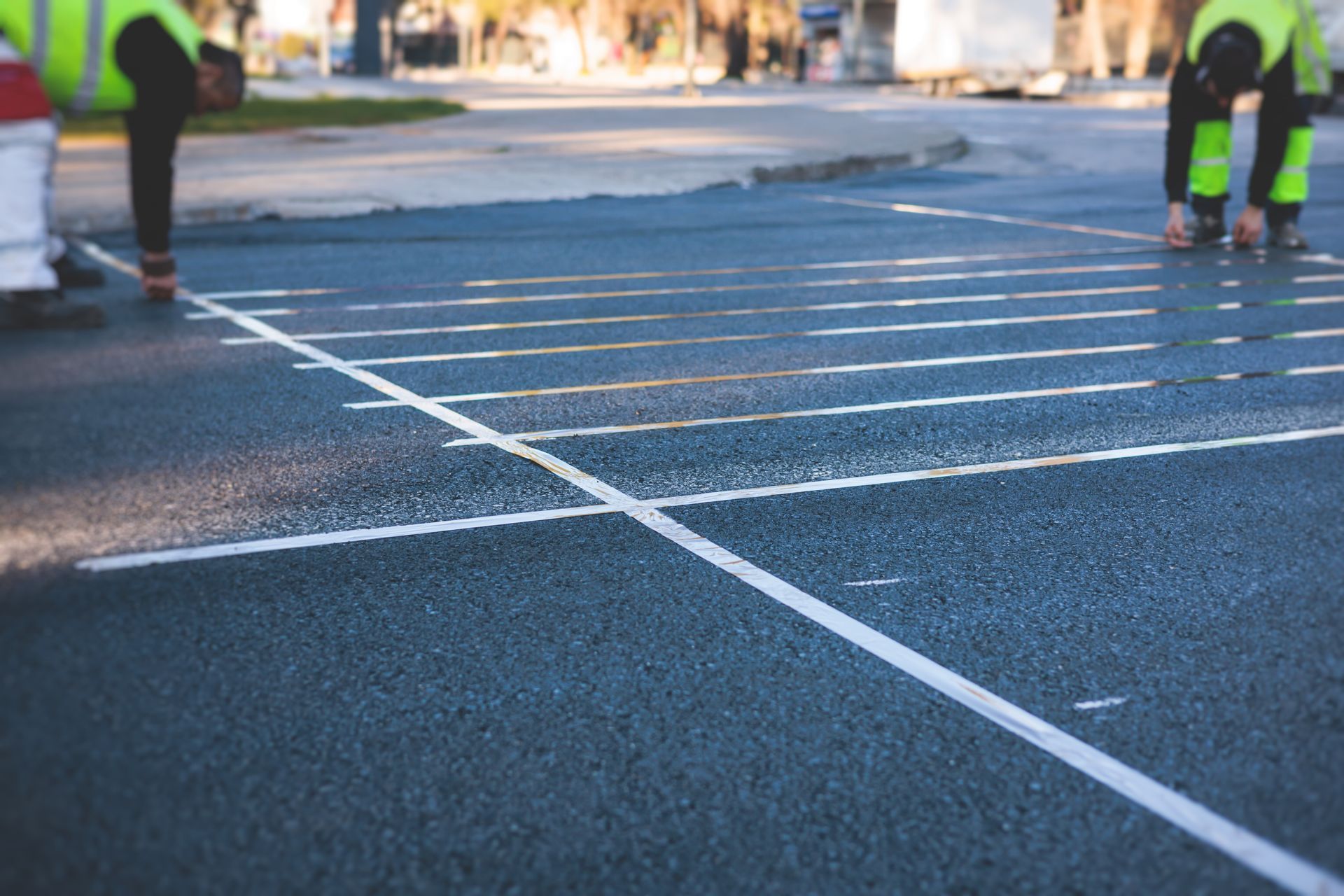
Once the striping is complete and cured on a new construction project, what you will see is a fully marked lot or deck with consistent line width, uniform paint opacity across all stalls, and clear differentiation between standard stalls, accessible stalls, fire lanes, and no-park zones. Lines that show thin coverage at the center of each pass, or that lack clean edges on the stop bar, indicate that the applicator used equipment that was not calibrated to the line width specified in the layout—both are visible without any specialized tools.
New construction projects also require coordination with the general contractor's punch list timeline. Striping applied before curb painting, signage installation, or final grading adjustments is frequently damaged by equipment access after the fact. Sequencing striping as one of the last site activities—after all vehicle-accessible construction traffic has concluded—preserves the finished markings through project close-out and reduces the likelihood of touch-up work before the property is handed over.
New construction line striping raises different questions than restriping an existing lot, particularly around layout compliance, substrate readiness, and how the work fits into a construction schedule.
What Property Owners Ask About the Work
How is the stall layout determined for a new parking lot or deck?
The layout follows the approved site plan, which specifies stall count, dimensions, and accessible parking placement. Field measurements are taken before layout begins to confirm that the paved dimensions match the plan, because minor grading or curb placement variations on new construction sometimes shift the usable field slightly from what was drawn.
What happens if the line striping needs to be adjusted after the initial layout is marked?
On new asphalt, layout lines are typically applied with a chalk or water-soluble marker before paint is committed to the surface, giving the opportunity to verify stall count and aisle widths before the permanent line is laid. This sequencing step costs time up front but prevents the more disruptive process of painting over incorrect striping on fresh pavement.
Why do parking decks require different paint products than asphalt lots?
Concrete deck surfaces are more alkaline than asphalt and expand and contract differently under load. Traffic paints formulated for asphalt may not flex adequately on concrete, leading to cracking at stall corners and along drive aisle edges where tire contact is most concentrated in Hartsville, Sumter, SC and surrounding area's parking structures.
How are accessible parking stalls marked to meet current standards?
Accessible stalls require a specific combination of stall width, adjacent access aisle width, surface slope within the stall, and compliant signage placement. The painted markings are one component of that requirement; the striping layout must account for the full stall-plus-aisle dimension to meet current accessibility standards.
What should the finished striping look like to confirm proper application?
Correctly applied traffic paint on new construction shows consistent line width from start to finish of each pass, fully opaque coverage without thin center strips, and clean edges without paint bleeding into the surrounding pavement. Lines that fade at the ends of each pass indicate the applicator did not maintain consistent machine speed during application.
Blacktop Sealcoating works directly with developers, general contractors, and property managers to coordinate new construction line striping within the project close-out timeline. Blacktop Sealcoating also performs new construction line striping in surrounding markets served by the company. Connect with Blacktop Sealcoating to confirm substrate readiness and schedule your layout review before the final inspection window opens.